
Mirena IUD Insertion: Your Pain Relief Options, Explained

Considering a Mirena IUD but put off by the thought of insertion? You're not alone, and it's not something you have to just push through. There are several pain relief options available, and most women find the procedure far more manageable than they expected once they know what's on offer.
What the Mirena Actually Does
The Mirena is a small T-shaped device placed inside the uterine cavity. It's one of the best long-acting reversible contraceptive options available, and also one of the most effective treatments for heavy or prolonged menstrual bleeding. It works by releasing the hormone progestin, which thickens cervical mucus to stop sperm reaching the uterus, and thins the uterine lining so a fertilised egg can't attach and grow. That thinning effect is also what makes it so effective for heavy bleeding. Many women have no periods at all after six months of treatment.
What Happens During Insertion
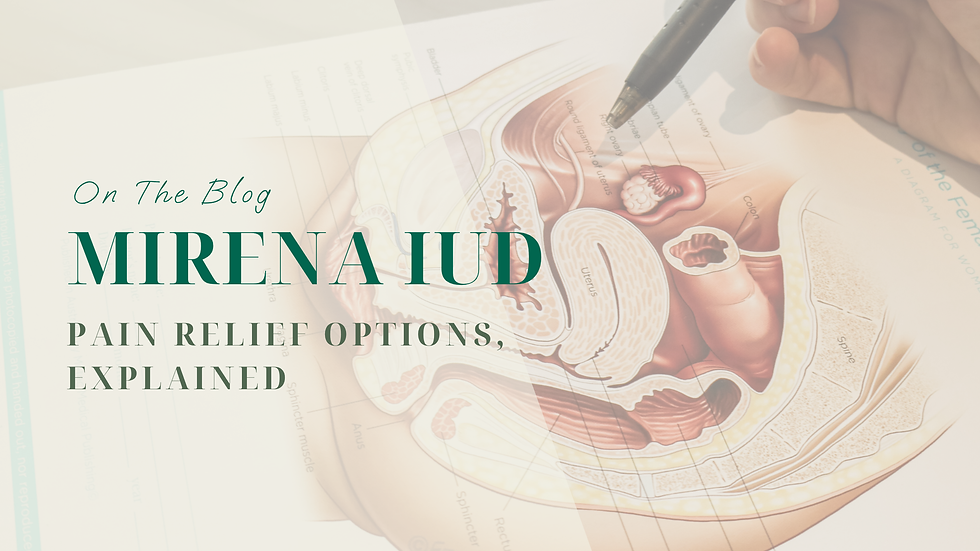
A Mirena insertion is usually done in the clinic and takes around five minutes. A speculum is inserted to view the cervix, which is cleaned with antiseptic. The cervix is then grasped, and a small instrument measures the length of the cervix and uterus together, so we know exactly how far the Mirena should sit. The device is inserted and the strings trimmed to around 2 to 3cm outside the cervix, then the instruments are removed. Some women need the cervix gently dilated to allow access.
For many patients, this is the part that puts them off. At best it can feel uncomfortable, and at worst too painful to continue in a clinic setting. Many women experience some crampy pain for hours to days afterwards, usually managed with simple analgesia.
Pain Relief Options Available
What most people don't realise is that there are several pain relief options for a Mirena insertion, and I usually combine a few to make the procedure as comfortable as possible:
Paracetamol and ibuprofen, taken an hour before the appointment, mainly to ease crampy pain afterwards.
Local anaesthetic spray to the cervix, which works within a minute or two and reduces discomfort from the instrument used to grasp it.
A paracervical block, where anaesthetic is injected around the cervix to reduce pain from the uterus itself. The needle is tiny, similar to what you'd have at the dentist for a filling. It can still cause a brief pinch or cramp, but usually makes the whole procedure significantly more comfortable.
Penthrox, or the "green whistle", an inhaled anaesthetic paramedics use, also effective for moderate to severe pain during insertion. It works quickly and wears off quickly, so you can drive again around 30 minutes afterwards.
If none of these appeal but you're still keen on a Mirena, insertion can also be done in the operating theatre under twilight sedation or general anaesthetic.
If Discomfort Is Putting You Off
If pain is what's holding you back from a Mirena, or any IUD, that's worth raising with your GP. Ask about what pain relief options are available and whether a referral makes sense for your situation.
You can book through GYON on (07) 3844 9932, or visit www.drmargiescanlon.com.au to find out more before your appointment.


Comments